Most property owners don’t think about their asphalt until something goes visibly wrong. By that point, the damage has often been developing beneath the surface for months sometimes years. Whether it’s a residential driveway or a commercial parking lot, asphalt pavement gives off clear signals when it’s beginning to fail. Recognizing these signs early can save you from larger structural problems, safety hazards, and far more extensive repairs down the road.
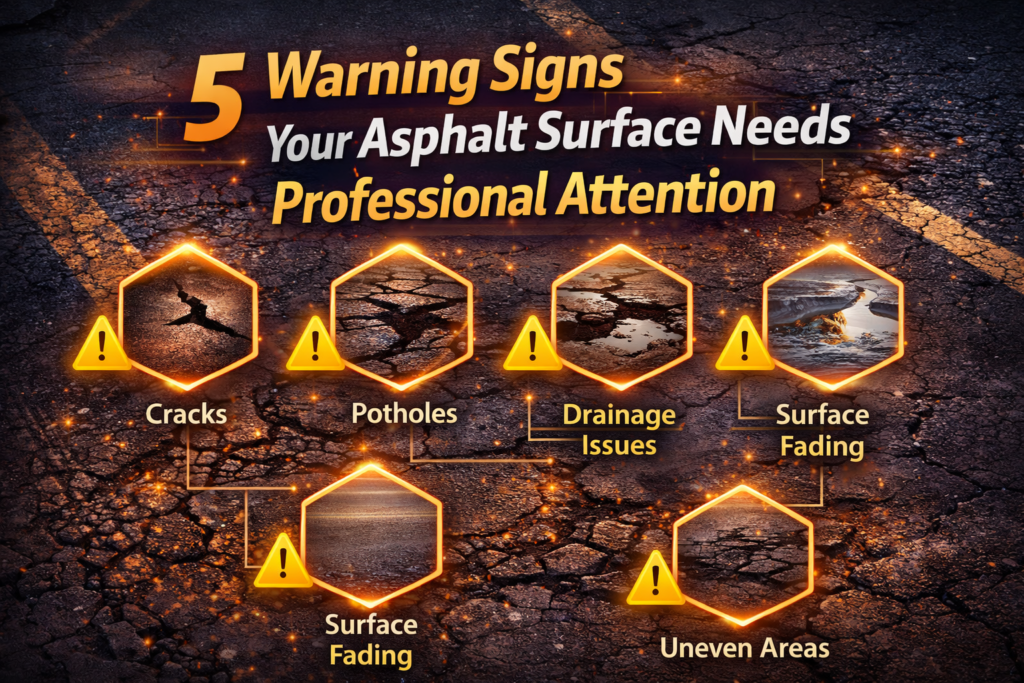
Here are five warning signs that your asphalt surface needs professional attention and what each one actually means for the integrity of your pavement.
1. Alligator Cracking Across the Surface
If your asphalt has developed a pattern of interconnected cracks that resemble the skin of an alligator, you’re looking at one of the most common indicators of structural fatigue. This type of cracking sometimes called fatigue cracking typically starts in areas that receive the most traffic or weight. It signals that the base layer beneath the asphalt has weakened, often due to water infiltration, poor drainage, or simply years of heavy use without proper maintenance.
What many people don’t realize is that alligator cracking rarely stays contained. Once the pattern begins, it tends to spread outward from the initial point of failure. Surface-level patching may slow the progression temporarily, but in most cases the underlying base needs to be addressed for a lasting fix. A qualified paving contractor can assess whether a full-depth repair or a complete overlay is the right course of action.
2. Standing Water and Poor Drainage
After a rainstorm, take a walk around your paved surfaces. If you notice pools of water sitting in specific areas rather than draining away, your asphalt likely has a grading or settling issue. Standing water is more than just an inconvenience it’s one of the leading causes of premature pavement failure.
Water that pools on the surface seeps into micro-cracks over time, weakening the binder that holds the asphalt aggregate together. In regions like Northeastern Pennsylvania, the problem compounds during winter when that trapped water freezes, expands, and breaks the pavement apart from within. This freeze-thaw cycle is one of the most destructive forces acting on asphalt in colder climates. Companies that understand local conditions like About Conte Paving & Construction Avoca know that proper grading and drainage solutions during installation are what prevent these problems from developing in the first place.
3. Fading and Oxidation
Fresh asphalt has a rich, dark appearance. Over time, exposure to UV rays and oxygen causes the surface to turn gray and become brittle. This process, known as oxidation, strips away the flexible oils in the asphalt binder, leaving behind a dry, rigid surface that cracks more easily under stress.
Many property owners dismiss fading as purely cosmetic, but it’s actually a sign that the protective qualities of the asphalt are diminishing. Sealcoating is the standard preventative measure here a protective layer applied every two to three years that restores flexibility and shields the surface from UV damage, oil spills, and water penetration. It’s one of the most cost-effective forms of pavement maintenance available, yet it’s often overlooked until visible cracking has already begun.
4. Potholes and Depressions
Potholes are hard to ignore, but many property owners underestimate how quickly they can worsen once they appear. A pothole forms when water penetrates the asphalt surface, erodes the base material underneath, and causes the top layer to collapse. Heavy traffic accelerates the process, especially in parking lots or driveways that see daily vehicle use.
Beyond the structural damage, potholes present a real liability concern. On commercial properties, an unrepaired pothole can lead to vehicle damage claims or pedestrian injuries. On residential properties, they create tripping hazards and can damage tires and suspension components. The key is to address potholes while they’re small. A professional can perform a proper cut-and-patch repair that removes the compromised material and replaces it with compacted new asphalt a far more durable solution than simply filling the hole with loose material.
5. Crumbling Edges Along the Pavement Border
The edges of a paved surface are its most vulnerable points. Without adequate support such as curbing, compacted soil, or a proper shoulder the outer edges of a driveway or parking lot will begin to crumble and break away. This is especially common on residential driveways that were installed without edge reinforcement.
Edge deterioration may seem like a minor issue, but it gradually narrows the usable surface of your pavement and allows water to infiltrate from the sides. Over time, this accelerates cracking and base erosion across the entire surface. Reinforcing edges with concrete curbing or applying additional asphalt along the border can halt the progression and extend the overall life of the pavement.
Prevention Is Always the Better Strategy
The common thread running through each of these warning signs is the same: early detection and proactive maintenance dramatically extend the life of any asphalt surface. Waiting until damage becomes severe almost always results in a more disruptive and expensive repair process.
A solid maintenance plan includes regular visual inspections, prompt crack sealing, sealcoating on a consistent schedule, and ensuring proper drainage at all times. For property owners in climates that experience harsh winters, paying attention to pavement condition in early spring after the freeze-thaw season has done its work is particularly important.
Whether you’re managing a single residential driveway or overseeing multiple commercial properties, understanding what your asphalt is telling you puts you in a much stronger position to protect your investment. The best time to address a pavement problem is before it becomes one.